Why Is an SF6 Gas Handling Plant for High-Voltage Circuit Breakers Essential for Reducing SF6 Emissions and Meeting Regulations?

High-voltage circuit breakers (HVCBs) are the backbone of stable power grids, relying on sulfur hexafluoride (SF6) gas for superior insulation and arc-quenching performance. However, SF6’s global warming potential (GWP) is 23,900 times that of CO2 over 100 years—making responsible management non-negotiable. The SF6 gas handling plant for high-voltage circuit breakers emerges as a critical solution, balancing grid reliability with environmental compliance. This specialized equipment manages the entire SF6 lifecycle, ensuring safe, efficient, and regulation-aligned operations for power utilities worldwide.
What Is an SF6 Gas Handling Plant for HVCBs?
An SF6 gas handling plant is a purpose-built system tailored to HVCB requirements, overseeing SF6 from filling to recovery and reuse. Unlike generic gas equipment, it meets the strict purity and leak-tightness demands of high-voltage applications (11kV to 800kV+).
Core Functions
Filling & topping-up: Precision injection of pure SF6 at optimal pressure to maintain HVCB performance.
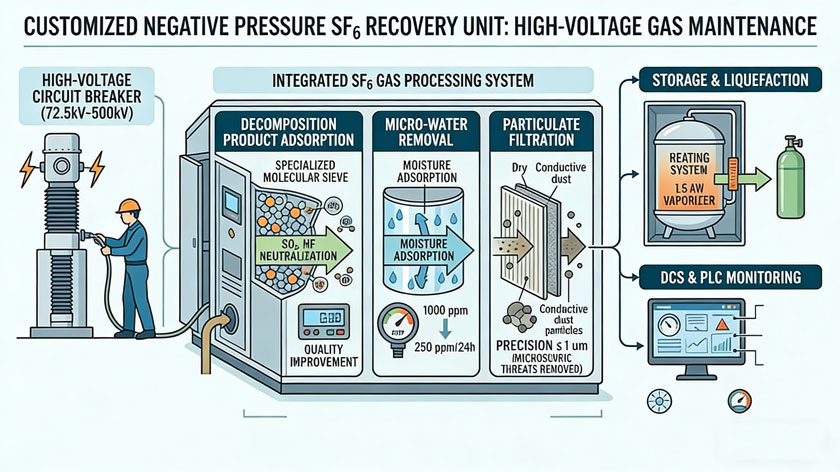
SF6 recovery: Extracting up to 99.9% of gas from decommissioned or maintenance-bound HVCBs to prevent emissions.
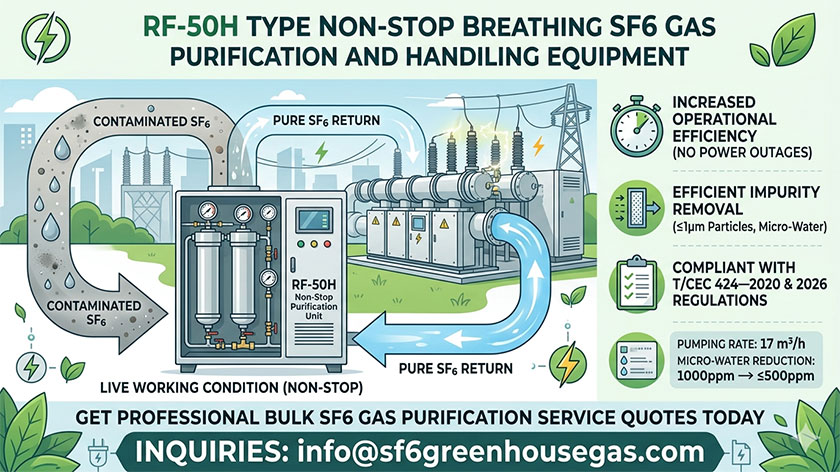
Purification: Removing moisture, air, and impurities to meet IEC 60376 standards (≥99.8% SF6 purity).
Sealed storage: Storing gas in leak-proof tanks with real-time monitoring to eliminate atmospheric release.
Key Components of High-Performance SF6 Handling Plants
Reliable SF6 gas handling for high-voltage circuit breakers depends on specialized components engineered for SF6’s unique properties:
High-pressure compressors: Transfer SF6 at up to 50 bar, ensuring efficient flow without safety risks.
Multi-stage purification filters: Eliminate moisture and particulates—critical for preserving SF6’s dielectric capabilities.
Vacuum pumps: Evacuate air/moisture from HVCBs pre-filling, preventing performance degradation.
Digital control panels: Monitor pressure, temperature, and purity; IoT-enabled models support remote operation and compliance logging.
Why SF6 Handling Plants Are Indispensable for HVCB Operations
1. Environmental Compliance & Emission Reduction
Listed under the Kyoto Protocol and EU F-Gas Regulation, SF6 emissions face strict limits. A quality handling plant prevents fugitive releases, enabling reuse and reducing the need for new gas production—directly cutting carbon footprints.
2. Maximizing HVCB Reliability & Lifespan
Contaminated SF6 impairs arc-quenching and insulation, increasing outage risks. By delivering pure gas, the plant extends HVCB lifespans by 20-30% and ensures consistent grid performance.
3. Avoiding Regulatory Penalties
Non-compliance with SF6 rules leads to heavy fines (up to €300,000 in the EU). The plant simplifies audit trails and ensures adherence to global standards, protecting utilities from reputational and financial damage.
Best Practices & Future Trends
To optimize performance, utilities should:
Invest in IEC 62271-4/ISO 14001 certified equipment for guaranteed compliance.
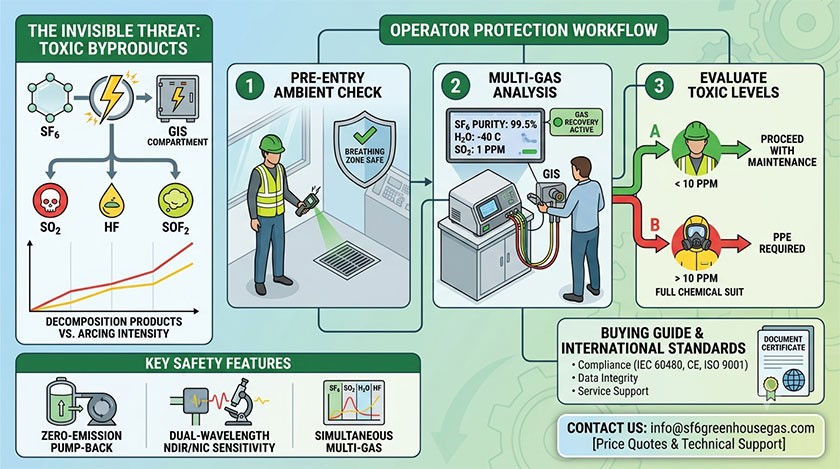
Train operators in leak detection and emergency response—critical for safe SF6 handling.
Conduct quarterly leak checks with infrared/ultrasonic detectors.
Future innovations include:
99.95% recovery rate systems for near-zero waste.
Low-energy designs to reduce the plant’s own carbon footprint.
Compatibility with low-GWP SF6 alternatives (e.g., fluoronitriles) as the industry evolves.
The SF6 gas handling plant for high-voltage circuit breakers is not just auxiliary equipment—it’s a strategic investment in sustainable, reliable power grids. As global electricity demand grows and climate regulations tighten, this plant bridges performance and environmental responsibility. For utilities aiming to future-proof operations, choosing a compliant, high-efficiency SF6 handling plant is essential to keep grids stable, costs low, and the planet protected.
Leave A Message
Your email address will not be published. Required fields are marked *
More Articles