SF6 Gas Recycling: The Critical Enabler for Argentina’s Semiconductor Manufacturing Growth
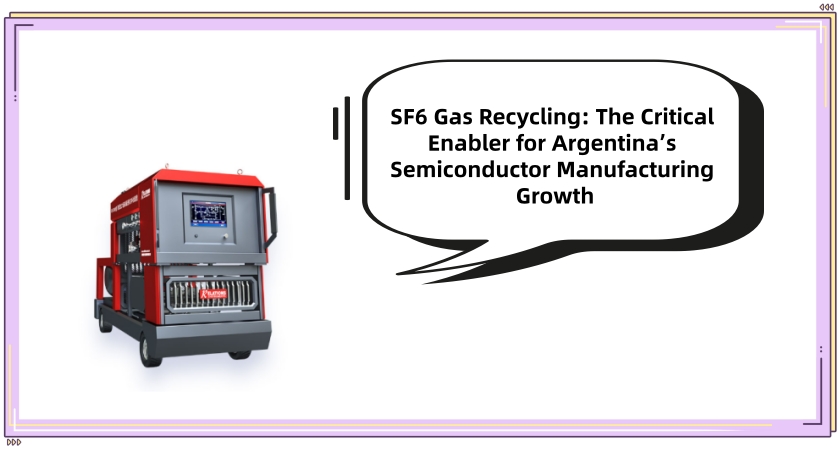
As Argentina accelerates its semiconductor manufacturing ambitions amid global supply chain shifts, the industry faces a dual challenge: ensuring process integrity and complying with stringent environmental regulations. Sulfur hexafluoride (SF6), a gas indispensable for plasma etching and dielectric deposition in chip production, poses unique hurdles—its extreme greenhouse effect (23,500 times that of CO₂ over 100 years) and high procurement costs demand innovative management. SF6 gas recycling for semiconductor manufacturing in Argentina has emerged as the definitive solution, aligning operational efficiency with sustainability goals while supporting the nation’s tech industry expansion.
Argentina’s Semiconductor Surge and SF6 Dependence
Argentina’s semiconductor sector is experiencing robust growth, driven by government initiatives to reduce reliance on imported electronics and capitalize on regional demand. Local manufacturers, from automotive chip producers to consumer electronics fabricators, rely on SF6 for its unmatched insulation and plasma stability properties. However, this dependence carries significant risks: volatile global SF6 prices (up to $20/kg) strain budgets, while unregulated emissions threaten compliance with Argentina’s ratification of the Kigali Amendment and national Decree 1031/2022, which mandates 30% reduction in high-GWP gases by 2030.
Traditional “use-and-dispose” models exacerbate these issues. Without recycling, semiconductor facilities lose 15-20% of SF6 to leaks or venting, increasing operational costs and environmental liabilities. For Argentina’s emerging fabs, which lack the scale of global giants, these losses can derail profitability and hinder market competitiveness.
Why Standard SF6 Solutions Fail Semiconductor Needs
Many existing gas handling systems in Argentina are designed for power sector applications, not the precision demands of semiconductor manufacturing. These systems often fall short in three critical areas:
Purification Quality: Semiconductor processes require SF6 purity exceeding 99.995% with moisture levels below 5 ppm. Generic systems struggle to meet this, leading to wafer defects and equipment damage.
Recovery Efficiency: Low negative pressure recovery capabilities leave residual SF6 in chambers, wasting valuable gas and compromising vacuum integrity.
Process Integration: Inflexible designs fail to adapt to semiconductor fabs’ modular layouts and varying gas flow requirements, causing downtime during installation and maintenance.
These gaps create an urgent need for specialized SF6 recycling technology tailored to Argentina’s semiconductor ecosystem.
The Advanced SF6 Recycling Solution for Argentine Semiconductor Fabs
A new generation of PLC-controlled SF6 gas recovery systems addresses these challenges, engineered to meet the unique demands of semiconductor manufacturing while aligning with global standards like GB/T 12022 (gas purity) and DL/T 662 (equipment design). Key features include:
1. Precision Purification for Semiconductor-Grade SF6
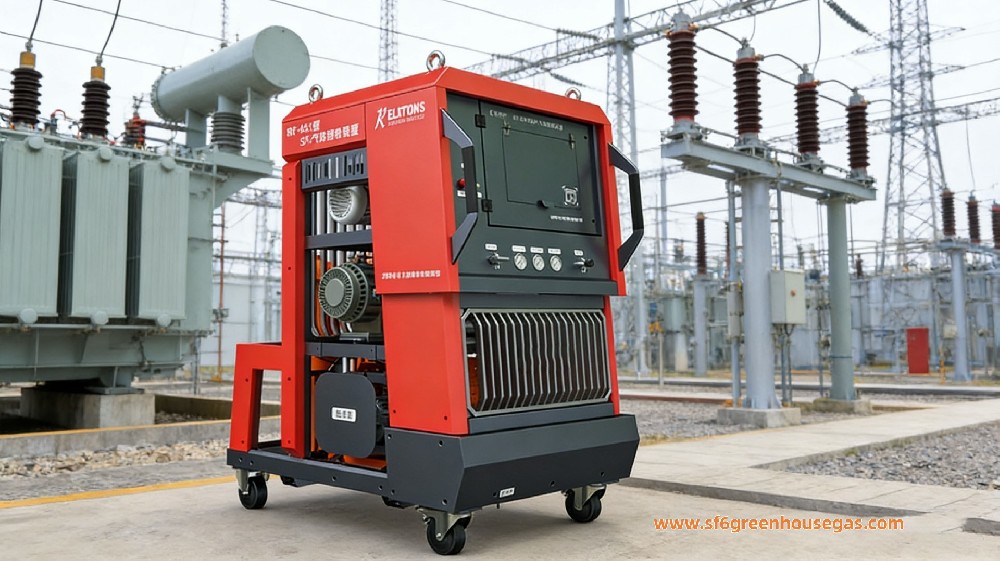
Equipped with elevating distillation towers and 300L stainless steel purification tanks, the system achieves sub-micron filtration () to remove moisture, solid particles, and SF6 decomposition byproducts (e.g., SO₂F₂). Purified gas meets the ppm moisture threshold required for plasma etching, eliminating wafer contamination risks.
2. High-Efficiency Recovery and Cost Savings
The system's 64 m³/h vacuum pump (0.1 mbar ultimate vacuum) and negative pressure recovery function boost SF6 recovery rate to over 95%, minimizing waste. For a mid-sized Argentine fab consuming 500 kg of SF6 monthly, this translates to annual savings of $12,000+ in procurement costs—critical for small-to-medium enterprises (SMEs) driving local growth.
3. Fast, Flexible Gas Management
With a 1.5kW vaporizer and 5 m³/h oil-free booster, the system enables rapid liquid SF6 filling (40L cylinders in 5-8 minutes) and adjustable pressure output (1-10 bar), adapting to diverse semiconductor equipment requirements. Modular design allows seamless integration into existing fab layouts, while touchscreen PLC control simplifies operation for technical teams.
4. Compliance and Traceability
Optional embedded sensors monitor SF6 purity, humidity, and decomposition products in real-time, providing audit-ready data for Argentina’s environmental agencies. The system’s closed-loop design eliminates venting, ensuring adherence to Decree 1031/2022 and avoiding fines of up to ARS 500,000.
Case for Adoption: Economic and Environmental Returns
For Argentine semiconductor manufacturers, investing in SF6 recycling delivers dual ROI. Environmentally, it reduces carbon footprints by preventing thousands of tons of equivalent CO₂ emissions annually—enhancing brand reputation in a market increasingly focused on sustainability. Economically, it insulates fabs from global SF6 price volatility and supply chain disruptions, a key concern amid ongoing chip shortages.
Moreover, the technology supports Argentina’s broader industrial goals. By localizing SF6 management, fabs reduce reliance on imported gas and equipment, aligning with the government’s “Industry 4.0” strategy to build self-sufficient tech ecosystems.
Conclusion: SF6 Recycling as a Growth Catalyst
As Argentina positions itself as a regional semiconductor hub, SF6 gas recycling for semiconductor manufacturing is no longer optional—it is a strategic imperative. Advanced recovery systems resolve the industry’s cost, compliance, and quality challenges, enabling fabs to compete globally while upholding environmental commitments. For Argentine manufacturers, adopting this technology is an investment in long-term profitability and sustainable growth—a critical step toward securing a leading role in the global semiconductor supply chain.
Leave A Message
Your email address will not be published. Required fields are marked *
More Articles