Can the SF6 gas recovery and refilling system maintain efficiency in extreme temperatures and high-altitude environments?
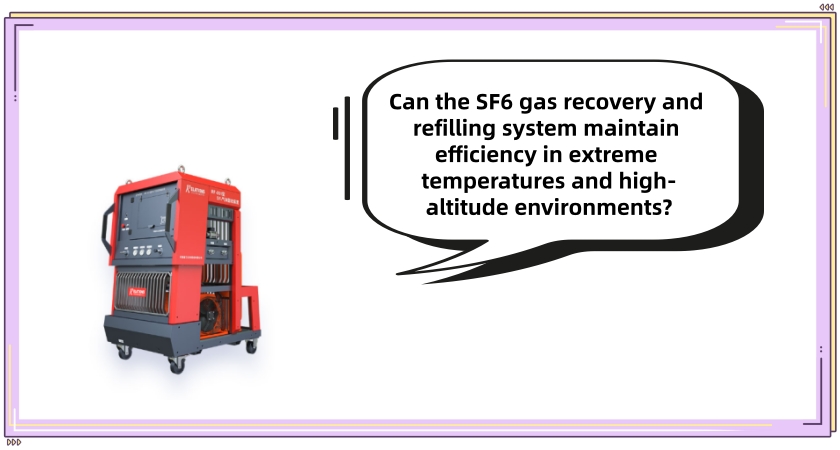
Yes, a well-engineered SF6 gas recovery and refilling system can maintain high efficiency in extreme temperatures and high-altitude environments, provided it incorporates specific design features to address the challenges posed by these conditions.
1. Performance in Extreme Temperatures
🔹 High Ambient Temperatures (e.g., >40°C / 104°F)
Challenge: Compressors and vacuum pumps overheat, reducing suction efficiency and risking shutdowns. SF₆ may not liquefy properly during filling.
Solution:
Mechanical refrigeration systems (not ambient air cooling) stabilize oil and gas temperatures.
Water-cooled, oil-free compressors prevent thermal degradation and contamination.
Thermal protection sensors auto-adjust operation to avoid overheating.
🔹 Low Temperatures (e.g., <–20°C / –4°F)
Challenge: SF₆ viscosity increases; liquid filling slows or fails. Lubricants thicken, and seals become brittle.
Solution:
Integrated gas heating systems (e.g., 1.5 kW vaporizers or heated lines) ensure smooth phase transition during refilling.
Cold-rated components (seals, hoses, electronics) maintain integrity.
Pre-heating cycles in PLC logic warm the system before operation.
✅ Modern industrial units—especially those compliant with DL/T 662—routinely operate in deserts (Middle East) and arctic regions (Scandinavia, Canada) with minimal efficiency loss.
2. Performance at High Altitudes (e.g., >2,500 meters / 8,200 ft)
🔹 Key Challenge:
At high elevations, lower atmospheric pressure reduces the compression ratio of vacuum pumps and compressors, slowing evacuation and recovery rates.
🔹 Engineering Solutions:
Oversized vacuum pumps (e.g., 64 m³/h rated) compensate for reduced air density.
Two-stage vacuum systems achieve deeper ultimate vacuum (≤0.1 mbar) despite thin air.
Altitude-compensated PLC control adjusts run times and pressure thresholds automatically.
Sealed electrical enclosures prevent arcing in low-pressure environments.
✅ Field deployments in the Andes, Tibetan Plateau, and Rocky Mountains confirm that properly spec'd SF6 recovery systems maintain >95% recovery efficiency even above 3,000 meters.
3. Validation Through Standards & Real-World Use
Reputable manufacturers design systems to meet:
IEC 60068-2: Environmental testing for temperature and altitude
DL/T 662: Includes operational stability requirements under stress conditions
IP54 or higher ingress protection: For dust and moisture resistance in harsh climates
Utilities in regions like Saudi Arabia (50°C), Mongolia (–40°C), and Bolivia (3,600m) rely on these systems daily—proving robustness when engineered correctly.
Conclusion
Yes—a high-quality SF6 gas recovery and refilling system can maintain efficiency in extreme temperatures and high-altitude environments, but only if it includes:
Active thermal management (refrigeration + heating)
Altitude-adaptive vacuum/compression design
Industrial-grade components rated for environmental stress
When selecting equipment, verify its operating temperature range, maximum service altitude, and compliance with international environmental standards to ensure reliable field performance.
Leave A Message
Your email address will not be published. Required fields are marked *
More Articles