What Is an SF6 Gas Recovery, Purification & Refilling Unit and How Does It Work?

In the modern electrical power industry, sulfur hexafluoride (SF6) gas plays a critical role as an insulating and arc-quenching medium in high-voltage equipment such as gas-insulated switchgear (GIS), circuit breakers, and transformers. However, due to its extremely high global warming potential—23,500 times that of CO₂—responsible handling of SF6 is not just a technical necessity but an environmental imperative. This is where an SF6 gas recovery, purification & refilling unit becomes indispensable. These integrated systems ensure that used or contaminated SF6 gas is safely recovered, thoroughly purified, and efficiently reused, minimizing emissions and operational costs while maintaining equipment reliability.
Why SF6 Gas Management Matters
SF6 is prized for its excellent dielectric strength and thermal stability, making it ideal for compact, high-performance electrical infrastructure. Yet, over time, SF6 can degrade due to electrical arcing, moisture ingress, or air contamination, producing toxic byproducts like sulfur dioxide (SO₂), hydrogen fluoride (HF), and metal fluorides. Using degraded gas compromises insulation performance and poses safety risks. Moreover, venting SF6 into the atmosphere is strictly regulated under international agreements like the Kyoto Protocol and regional laws such as the EU F-Gas Regulation.
To comply with environmental standards and maintain grid reliability, utilities and industrial operators must adopt closed-loop gas management practices. At the heart of this strategy lies the SF6 gas recovery, purification & refilling unit—a specialized mobile or stationary system designed to handle the entire lifecycle of SF6 gas on-site.
How an SF6 Gas Recovery, Purification & Refilling Unit Works
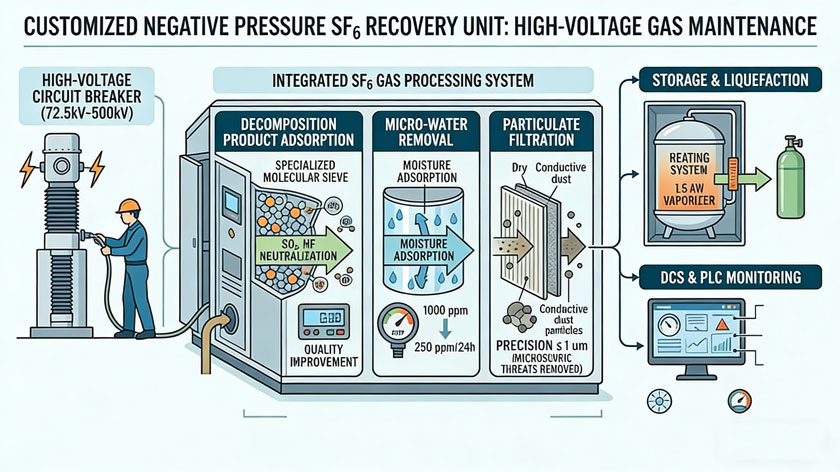
An SF6 gas recovery, purification & refilling unit integrates three core functions into a single, automated platform:
Recovery: Using a high-efficiency vacuum compressor or membrane pump, the unit extracts SF6 gas from electrical equipment, even at low pressures. Advanced models achieve recovery rates exceeding 99%, leaving minimal residual gas.
Purification: The recovered gas passes through a multi-stage filtration system:
Particulate filters remove solid decomposition products.
Adsorption columns filled with molecular sieves and activated alumina eliminate moisture and acidic compounds.
Cryogenic or membrane separation may be employed for ultra-high-purity applications. This process restores the gas to meet or exceed international purity standards such as IEC 60480 and GB/T 12022.
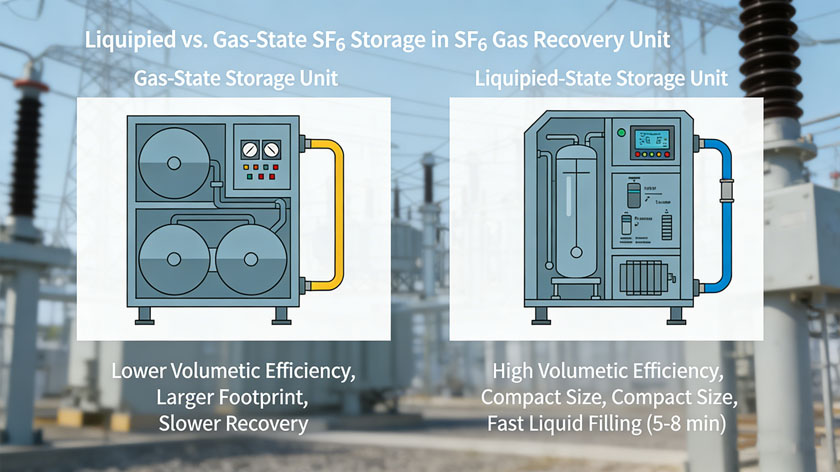
Refilling: Once purified, the SF6 gas is compressed and stored in internal or external cylinders, ready to be refilled into equipment at the required pressure and density. Many units feature precise mass flow meters and automatic shut-off to prevent overfilling.
Modern units often include smart controls, real-time monitoring of gas quality (e.g., dew point, purity), and data logging capabilities for compliance reporting.
Key Benefits of Using an Integrated SF6 Unit
Investing in a high-quality SF6 gas recovery, purification & refilling unit delivers multiple advantages:
Environmental Compliance: Prevents SF6 emissions and supports corporate sustainability goals.
Cost Savings: Reusing purified gas eliminates the need for frequent purchases of new SF6, which is expensive and subject to supply constraints.
Operational Efficiency: On-site processing reduces downtime compared to sending gas off-site for reconditioning.
Safety Enhancement: Removes hazardous decomposition products, protecting personnel during maintenance.
Regulatory Readiness: Detailed logs of gas handling support audits under EPA, F-Gas, or other regulatory frameworks.
Best Practices for Optimal Performance
To maximize the effectiveness of your SF6 gas recovery, purification & refilling unit, follow these best practices:
Regular Maintenance: Replace filters and adsorbents according to manufacturer guidelines or based on usage hours.
Pre-Cleaning: Ensure equipment is free of excessive oil or liquid contaminants before recovery.
Leak Testing: Use the unit’s vacuum function to check for system integrity before refilling.
Quality Verification: Always test purified gas with a portable SF6 analyzer to confirm moisture (<10 ppmv), purity (>99.9%), and absence of toxic byproducts.
Operator Training: Only certified personnel should operate the unit to ensure safety and accuracy.
Choosing the Right Unit for Your Needs
When selecting an SF6 gas recovery, purification & refilling unit, consider:
Processing capacity (e.g., recovery speed in Nm³/h)
Final gas purity specifications
Portability (mobile cart vs. skid-mounted for substations)
Automation level (manual, semi-automatic, or fully automatic)
Compliance certifications (CE, ISO, IEC)
Leading manufacturers offer customizable solutions tailored to utility-scale substations, industrial plants, or service contractors.
Conclusion: A Smart Investment for the Future Grid
As the global push toward decarbonization intensifies, responsible SF6 management is no longer optional—it’s essential. An SF6 gas recovery, purification & refilling unit empowers power providers to uphold environmental stewardship without sacrificing performance or reliability. By enabling closed-loop reuse of this critical insulating gas, these units support greener operations, reduce lifecycle costs, and ensure compliance with evolving regulations.
For utilities, transmission operators, and maintenance teams, integrating a robust SF6 handling solution isn’t just about meeting today’s standards—it’s about building a safer, more sustainable energy infrastructure for tomorrow.
Leave A Message
Your email address will not be published. Required fields are marked *
More Articles