SF6 Recovery Equipment Complying with IEC 60376/60480 Standard: Key to Sustainable Electrical Operations
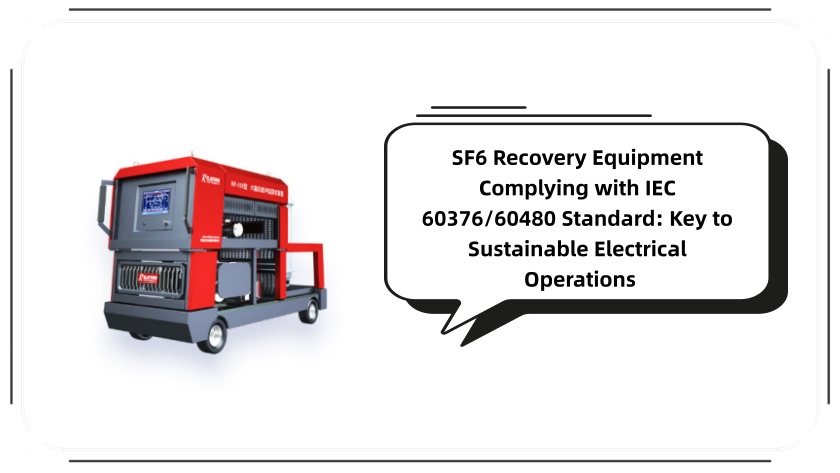
Sulfur hexafluoride (SF6) remains irreplaceable in high-voltage (HV) electrical equipment—from circuit breakers to transformers—thanks to its unmatched dielectric strength and arc-quenching capabilities. Yet its extreme global warming potential (GWP: 23,500x CO₂ over 100 years) and long atmospheric lifetime (3,200 years) have made SF6 emissions a top environmental priority. To mitigate these impacts, the International Electrotechnical Commission (IEC) established two critical standards: IEC 60376 (specifications for SF6 gas quality) and IEC 60480 (guidelines for safe SF6 handling, recovery, and recycling). For utilities, industrial facilities, and grid operators, sf6 recovery equipment complying with iec 60376/60480 standard is no longer optional—it’s the foundation of responsible SF6 management, regulatory compliance, and cost-efficient operations.
Why IEC 60376/60480 Standards Are Non-Negotiable for SF6 Recovery
Before diving into the equipment itself, it’s critical to understand what these IEC standards mandate—and why they matter for electrical operations:
1. IEC 60376: Ensuring SF6 Gas Purity
IEC 60376 defines the minimum quality requirements for SF6 gas used in electrical equipment, including limits for:
Moisture: ≤50 ppm (parts per million) for new gas, ≤150 ppm for recycled gas (moisture causes corrosion and insulation failure).
Impurities: ≤10 ppm for toxic decomposition byproducts (e.g., SO₂, HF) and ≤0.1% for non-condensable gases (e.g., N₂, O₂).
This standard ensures that recovered or recycled SF6 performs as well as new gas—avoiding equipment damage or safety hazards from contaminated gas.
2. IEC 60480: Minimizing SF6 Emissions
IEC 60480 focuses on safe, low-emission SF6 handling throughout its lifecycle, with key requirements for recovery equipment:
Recovery efficiency: Must capture ≥95% of SF6 from decommissioned or maintained equipment (to prevent venting).
Emission limits: Leakage from recovery equipment must be ≤0.1% of the handled gas volume per year.
Recycling protocols: Mandates purification processes to restore recovered SF6 to IEC 60376 quality standards (enabling reuse instead of disposal).
Together, these standards create a framework for "closed-loop" SF6 management—reducing reliance on new gas purchases, cutting emissions, and ensuring compliance with global regulations (e.g., EU F-Gas Regulation, U.S. EPA SF6 Rules). Non-compliant equipment risks environmental harm, regulatory fines (up to €100,000 in the EU), and costly equipment failures.
Core Features of SF6 Recovery Equipment Complying with IEC 60376/60480 Standard
Not all SF6 recovery equipment meets IEC standards. To ensure compliance and performance, look for these non-negotiable features:
1. High Recovery Efficiency (≥95% per IEC 60480)
Compliant equipment uses dual-stage compressors and vacuum pumps to extract SF6 from electrical equipment down to a residual pressure of ≤5 mbar (millibars). This exceeds IEC 60480’s 95% recovery requirement, ensuring minimal gas is vented. For example, a 10kg SF6 circuit breaker would leave ≤0.5kg of gas unrecovered—far below the 5% threshold.
2. Integrated Purification for IEC 60376 Compliance
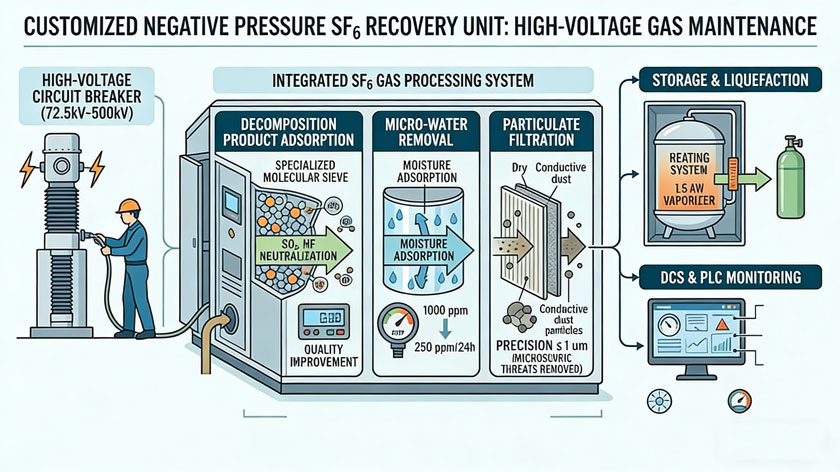
Recovered SF6 often contains moisture, oil, or decomposition byproducts. Compliant equipment includes:
Moisture filters: Use molecular sieves to reduce moisture to ≤50 ppm (meeting IEC 60376’s new gas standard).
Oil separators: Remove lubricant from compressors to prevent contamination.
Acid scrubbers: Neutralize toxic byproducts (e.g., HF) to ≤10 ppm, making the gas safe for reuse.
This purification turns "used" SF6 into gas that performs identically to new supplies—cutting gas procurement costs by 50–70%.
3. Low-Emission Design (≤0.1% Annual Leakage)
IEC 60480 strictly limits leakage from recovery equipment. Compliant models feature:
Hermetic seals: Prevent gas escape from hoses, valves, and compressors.
Pressure relief valves: Safely release excess pressure without venting SF6.
Leak-testing ports: Let technicians verify tightness before use (per IEC 60480’s pre-operation checks).
These design choices ensure the equipment itself doesn’t become a source of SF6 emissions.
4. Data Logging for Compliance Audits
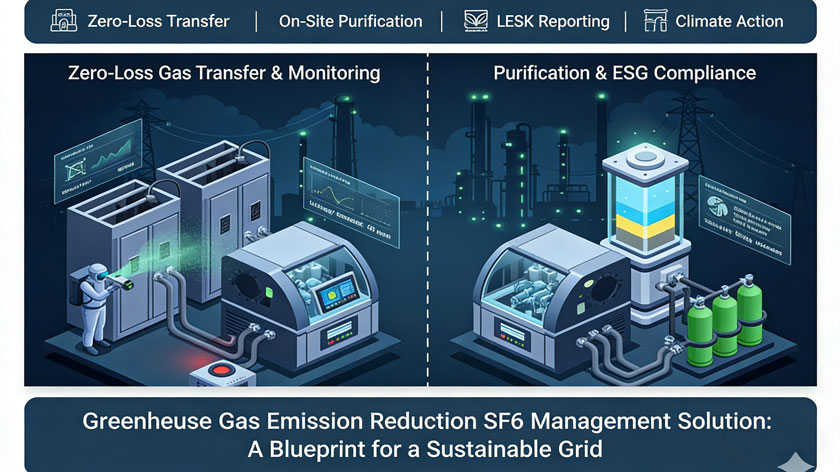
Regulators require proof of SF6 recovery and purification. Compliant equipment includes:
Built-in sensors: Track recovery volume, purity levels, and operating time.
Cloud connectivity: Automatically uploads data to a secure platform (e.g., for EU F-Gas reporting).
Audit-ready reports: Generates documents showing compliance with IEC 60376/60480—saving hours of manual record-keeping.
Real-World Applications of Compliant SF6 Recovery Equipment
The sf6 recovery equipment complying with iec 60376/60480 standard delivers value across critical sectors:
1. Utility Substations
Grid operators maintain thousands of SF6-filled circuit breakers and transformers. A U.K. utility deployed 15 compliant recovery units across its substations. Over one year, the equipment recovered 2,500kg of SF6—purified it to IEC 60376 standards, and reused 90% of it. This avoided purchasing 2,250kg of new SF6 (saving ~112,500,based on 50/kg) and prevented emissions equivalent to 52,875 tonnes of CO₂.
2. Renewable Energy Plants
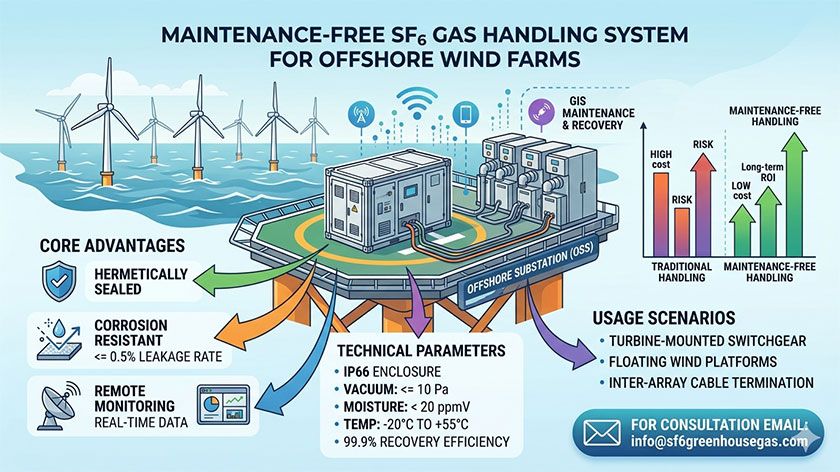
Wind and solar farms use SF6 equipment to connect to the grid. An offshore wind farm in Denmark used compliant recovery equipment during maintenance of 30 HV breakers. The equipment’s high recovery efficiency (98%) and corrosion-resistant design (for marine environments) ensured no SF6 was released into the ocean or atmosphere—meeting strict EU maritime environmental rules.
3. Industrial Facilities
Manufacturing plants (e.g., steel, semiconductors) rely on SF6 for process cooling and electrical safety. A U.S. semiconductor plant adopted compliant recovery equipment to service its MV switchgear. The equipment’s purification system restored SF6 to IEC 60376 quality, allowing the plant to reuse the gas in its cleanrooms—avoiding $80,000 in annual new gas costs and passing a rigorous EPA audit.
The Business Case for Investing in IEC-Compliant SF6 Recovery Equipment
While compliant SF6 recovery equipment costs 15,000–50,000 (depending on capacity), the ROI is rapid—typically 1–2 years:
Reduced gas costs: Reusing recovered/purified SF6 cuts new gas purchases by 50–90%. For a facility using 1,000kg of SF6 yearly, this saves 25,000–70,000 (at 50–100/kg).
Avoided fines: Non-compliance with IEC standards and local regulations can lead to six-figure fines. For example, a European manufacturer was fined €80,000 in 2024 for using non-compliant recovery equipment that vented 100kg of SF6.
Extended equipment life: Using IEC 60376-compliant gas prevents corrosion and insulation failure, extending the lifespan of HV equipment (e.g., a circuit breaker’s life increases from 20 to 30 years).
Sustainability credentials: Compliance supports ESG (Environmental, Social, Governance) goals—critical for attracting investors and customers. A 2024 survey found 78% of utilities prioritize IEC-compliant SF6 equipment in procurement.
As global pressure to reduce SF6 emissions intensifies, sf6 recovery equipment complying with iec 60376/60480 standard has become a cornerstone of responsible electrical operations. It ensures SF6 is recovered, purified, and reused safely—cutting costs, avoiding fines, and minimizing environmental impact. For utilities, renewable energy providers, and industrial facilities, investing in compliant equipment isn’t just about meeting standards—it’s about building a sustainable, reliable power infrastructure for the future.
Leave A Message
Your email address will not be published. Required fields are marked *
More Articles