Greenhouse Gas Emission Reduction: Advanced SF6 Management Solutions
In the global drive toward Net-Zero emissions, the electrical power industry faces a unique challenge. Sulfur Hexafluoride (SF6), while being the world’s most effective electrical insulator, is also the most potent greenhouse gas known to science. With a Global Warming Potential (GWP) of 23,500 times that of CO2 and an atmospheric lifespan of 3,200 years, even minor leaks can have a staggering environmental impact.
Implementing a comprehensive greenhouse gas emission reduction SF6 management solution is no longer just a corporate social responsibility (CSR) goal; it is a regulatory necessity. This article explores the strategic management of SF6 across various industrial use cases to achieve significant carbon footprint reductions.
1. Use Case: Substations and Grid Infrastructure (Utility Sector)
The utility sector is the largest reservoir of SF6 gas. In high-voltage substations, the gas is housed in Gas-Insulated Switchgear (GIS). The primary "leakage points" occur during gas transfer operations—filling, recovering, and testing.
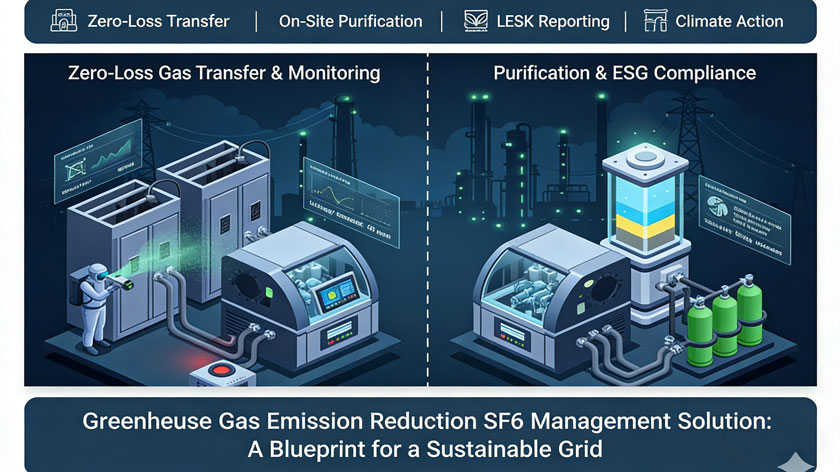
The Solution: Zero-Loss Gas Transfer
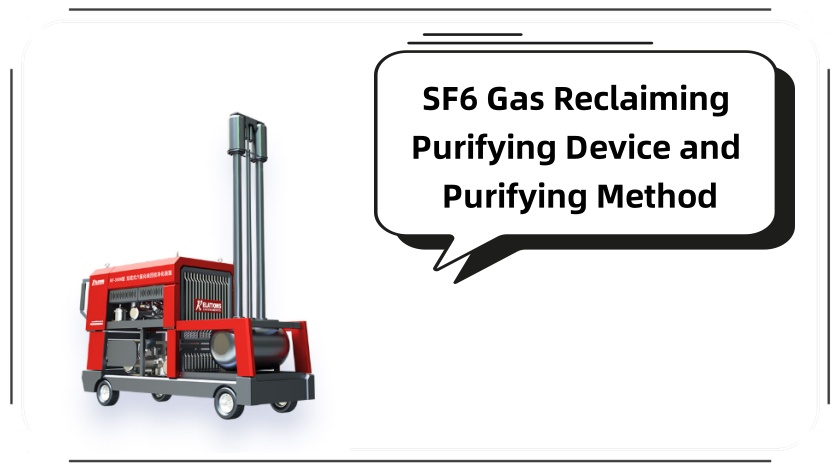
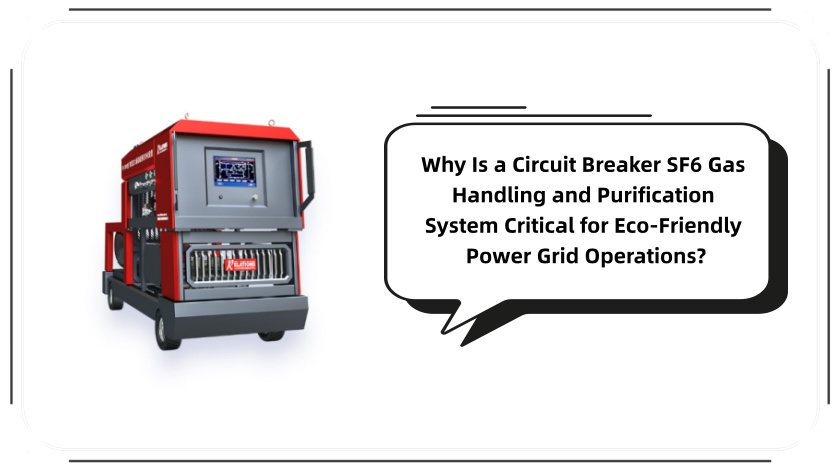
To reduce emissions, utilities must move away from manual, multi-hose setups. Integrated SF6 gas recovery plants designed for high-voltage recovery ensure a closed-loop system.
Self-Sealing Couplings: Using DN20 or DN8 self-sealing connectors prevents the "puff" of gas traditionally lost during connection and disconnection.
Negative Pressure Recovery: Advanced units can pull a vacuum to reclaim 99.9% of the gas, ensuring that the GIS compartment is virtually empty before it is opened to the atmosphere for maintenance.
2. Use Case: Petrochemical and Heavy Industrial Plants
Petrochemical refineries and metallurgical plants operate in harsh, corrosive environments. Here, the risk of "fugitive emissions" due to seal degradation is significantly higher than in standard indoor substations.
The Solution: Continuous Monitoring and Early Intervention
In these scenarios, the management solution shifts from reactive maintenance to proactive monitoring.
Fixed Sensor Arrays: Laser-based or infrared sensors installed around the GIS perimeter detect leaks at the parts-per-million (ppm) level.
Mass Balance Accounting: By integrating a digital scale with the SF6 recovery unit, plants can track exactly how much gas is recovered versus refilled. Any discrepancy is immediately flagged as an emission, allowing for rapid repair before the leak worsens.
3. Use Case: Life Cycle Management and Gas Purification
One of the largest sources of emissions is the disposal of "used" or "contaminated" SF6. When an arc fault occurs, the gas breaks down into toxic byproducts like SO2 and HF. Historically, contaminated gas was often vented or stored indefinitely in leaking cylinders.
The Solution: On-Site Purification and Circular Economy
Modern greenhouse gas emission reduction SF6 management solutions prioritize on-site regeneration.
Multi-Stage Filtration: Integrated units equipped with molecular sieves and chemical absorbers remove moisture and acidity.
Particle Capture: High-precision filters (rated at less than 1 micrometer) remove solid decomposition products.
Result: The gas is restored to IEC 60376 or GB/T 12022 standards, allowing it to be re-injected into the equipment rather than requiring new "virgin" gas production.
4. Technical Requirements for an Emission-Reducing Recovery Plant
To be an effective part of a decarbonization strategy, an SF6 management unit must meet specific technical benchmarks:
| Feature | Requirement | Impact on Emissions |
| Recovery Rate | >= 99.9% | Minimizes residual gas left in equipment. |
| Vacuum Performance | < 0.1 mbar | Removes air/moisture to prevent gas degradation. |
| Compression | Oil-Free | Prevents gas contamination, ensuring re-usability. |
| Monitoring | PLC-based Digital Logging | Provides audit-ready carbon credit data. |
| Certifications | CE/UL Certified | Ensures safety and leak-proof operation under pressure. |
5. The Role of Digitalization: PLC and Cloud Reporting
Emission reduction is as much about data as it is about hardware. Modern management solutions utilize Programmable Logic Controllers (PLC) to automate the gas handling process.
Automated Leak Testing: The unit can perform a "Vacuum Retention Test," monitoring the vacuum level over 24 hours and logging the data. If the vacuum holds, the repair is verified.
Reporting for ESG: Data from the recovery unit can be exported to ESG (Environmental, Social, and Governance) platforms, providing verifiable proof of reduced greenhouse gas emissions for regulatory bodies and stakeholders.
6. Strategic Repair Technologies: Polymer Encapsulation
When a leak is detected in an energized environment where downtime is not an option, "Cold Repair" technology serves as a vital emission reduction tool.
Polymer Sealing: Specialized resins are applied to leaking flanges or valves. This stops the leak immediately, preventing thousands of kilograms of CO2 equivalent from entering the atmosphere while waiting for a scheduled outage.
7. Transitioning to SF6 Alternatives (The Long-Term Solution)
While the immediate focus is on managing existing SF6 inventories, a complete management solution includes the transition to "Green Gas" alternatives (such as C4-FN or Clean Air mixtures).
Equipment Compatibility: Modern recovery plants are increasingly being designed as "multi-gas" compatible, allowing them to handle both SF6 and new alternative mixtures during the transition period.
8. Conclusion: A Commitment to a Sustainable Grid
The implementation of a greenhouse gas emission reduction SF6 management solution is the single most effective action an electrical utility or petrochemical plant can take to lower its direct (Scope 1) emissions. By combining high-efficiency oil-free recovery, advanced on-site purification, and rigorous digital logging, the power industry can continue to benefit from the reliability of GIS technology while meeting global climate targets.
As regulations like the EU F-Gas Regulation and similar global mandates tighten, the adoption of professional, integrated, and certified gas handling technology is the only path forward for a sustainable and compliant electrical grid.
Leave A Message
Your email address will not be published. Required fields are marked *
More Articles