SF6 Gas Testing Purity Checking for the GIS Service Provider
For GIS (Gas-Insulated Switchgear) service providers, maintaining the integrity of high-voltage electrical systems hinges on one often-overlooked yet vital practice: SF6 gas testing purity checking. Sulfur hexafluoride (SF₆) is the lifeblood of GIS—providing insulation, arc quenching, and operational stability. However, even minor contamination or degradation of SF₆ can compromise equipment performance, trigger catastrophic failures, and violate stringent environmental regulations.
This article serves as an essential resource for GIS service providers seeking to understand why SF6 gas testing purity checking is non-negotiable, what parameters matter most, which tools to use, and how to align with global standards—all while optimizing safety, reliability, and compliance.
Why SF6 Purity Matters in GIS Operations
SF₆ is prized for its exceptional dielectric strength and thermal stability. But when exposed to electrical arcing, moisture, or air ingress, it decomposes into hazardous byproducts like sulfur dioxide (SO₂), hydrogen fluoride (HF), and metal fluorides. Additionally, leaks or improper handling can introduce air (N₂/O₂) or moisture (H₂O) into the system.
Even small impurities can:
Reduce dielectric strength → risk of internal flashovers
Corrode internal components → premature aging
Generate toxic residues → safety hazards during maintenance
Trigger false alarms or pressure deviations
For GIS service providers, routine SF6 gas testing purity checking isn’t just preventive maintenance—it’s a core element of predictive asset management and client trust.
Key Parameters in SF6 Purity Testing
When performing SF6 gas testing purity checking for the GIS service provider, focus on these critical metrics aligned with international standards like IEC 60480 (for reused gas) and IEC 60376 (for new gas):
Moisture Content (Dew Point)
Measured in ppm(v) or °C dew point
Acceptable limit: Typically ≤200 ppm(v) (varies by voltage class)
High moisture accelerates decomposition and causes ice formation at low temps
Air (N₂ + O₂) Concentration
Indicates air leakage or incomplete evacuation during filling
Should be <0.2% by volume in high-voltage GIS
Decomposition Byproducts
SO₂, HF, H₂S, COF₂ – markers of internal arcing or overheating
SO₂ > 2 ppm often signals active fault conditions
SF6 Purity (% by volume)
Virgin SF₆: ≥99.9%
Reused SF₆: ≥99.5% (per IEC 60480)
Lower purity = reduced insulation performance
CF₄ and Other Impurities
CF₄ may indicate manufacturing residue or cross-contamination
Accurate measurement of these parameters allows GIS service providers to make informed decisions: Can the gas be filtered and reused? Or must it be recovered and replaced?
Essential Tools for SF6 Gas Testing Purity Checking
To deliver reliable, data-driven services, GIS providers must invest in modern, calibrated testing equipment:
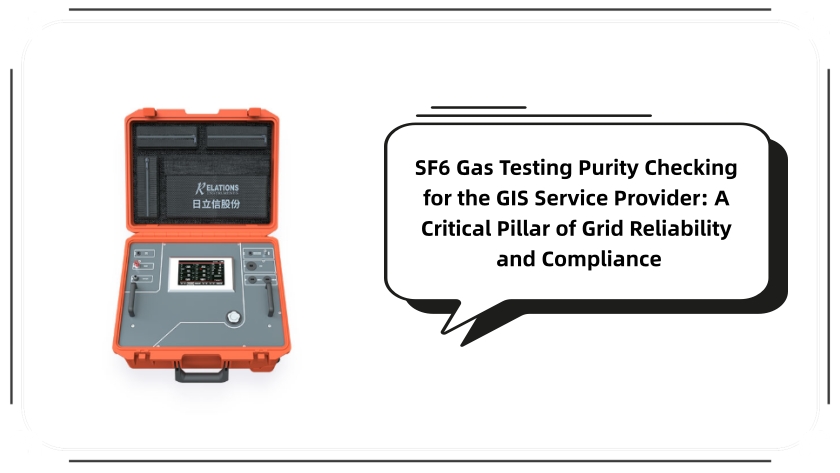
✅ Portable SF6 Gas Analyzers
Multi-parameter devices that measure moisture, SO₂, HF, and purity in <2 minutes
Look for models compliant with IEC 62271-4 and featuring:
Electrochemical or NDIR sensors
Automatic temperature/pressure compensation
Data logging and PDF report generation
✅ Dew Point Meters
For standalone moisture verification (chilled mirror or capacitive sensors)
Critical after gas filling or during commissioning
✅ Gas Sampling Kits
Include SF₆-compatible valves, tubing, and sample cylinders
Ensure representative, contamination-free samples
✅ Calibration & Validation Tools
Regular calibration against certified gas standards ensures accuracy
Never skip annual recalibration—faulty readings risk equipment safety
Pro Tip: Choose analyzers with Bluetooth or USB connectivity to integrate test results into CMMS (Computerized Maintenance Management Systems) for audit trails and trend analysis.
Best Practices for GIS Service Providers
Implementing a robust SF6 gas testing purity checking protocol involves more than just equipment—it requires standardized workflows:
Test Before Every Major Intervention
Always analyze gas before opening GIS compartments—especially after tripping events.Document Everything
Record date, location, equipment ID, operator, and all parameter values. This supports compliance with EPA GHG Reporting, EU F-Gas Regulation, and client SLAs.Use Closed-Loop Handling
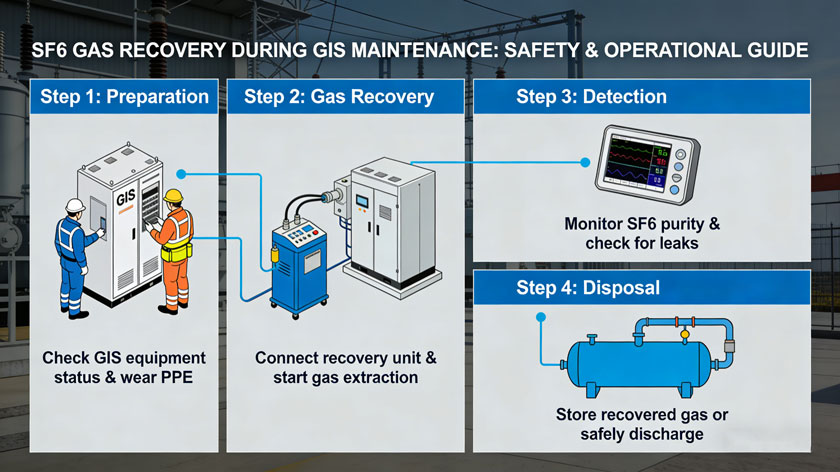
Never vent SF6 Recover, test, and either purify on-site or send to a certified reclaimer (per AHRI S-900 or IEC 60480).Train Your Technicians
Only certified personnel should handle SF₆. Training should cover:Interpretation of test results
Safe handling of decomposed gas
Emergency response for leaks or exposure
Establish Threshold-Based Actions
Create internal guidelines such as:SO₂ > 5 ppm → Investigate internal fault
Moisture > 300 ppm → Replace desiccant and reprocess gas
Purity < 98% → Full recovery and replacement
Regulatory and Environmental Imperatives
Global regulations are tightening around SF6 due to its GWP of 23,500—making SF6 gas testing purity checking for the GIS service provider not just technical best practice but a legal requirement.
European Union: F-Gas Regulation mandates leak checks, recovery, and reporting; venting is prohibited.
United States: EPA requires large utilities to track SF₆ emissions under Subpart DD of the Greenhouse Gas Reporting Rule.
ISO 14064 & GHG Protocols: Demand accurate SF6 accounting for corporate carbon footprints.
By rigorously testing gas purity, GIS service providers help clients avoid fines, support ESG goals, and demonstrate environmental stewardship.
The Business Case for Precision Testing
Beyond compliance, there’s a strong ROI in investing in SF6 gas testing purity checking:
Prevent unplanned outages – Early detection avoids $500k+ GIS failure costs
Extend equipment life – Clean, dry SF6 reduces corrosion and wear
Reduce gas consumption – Recycle instead of replace (SF6 costs 20–50/kg)
Win client trust – Data-backed service reports differentiate your business
Leading GIS service providers now include SF6 purity certification as part of every maintenance contract—a value-added service that builds long-term partnerships.
Conclusion: Purity Equals Performance
For any GIS service provider, SF6 gas testing purity checking is far more than a checkbox—it's a strategic capability that safeguards grid reliability, protects personnel, ensures regulatory compliance, and enhances service quality. In an era of digital substations and net-zero commitments, precision gas management is no longer optional.
By adopting standardized testing protocols, investing in certified equipment, and training skilled technicians, GIS service providers position themselves as indispensable partners in the energy transition—where every ppm of moisture and every percentage of purity counts.
Leave A Message
Your email address will not be published. Required fields are marked *
More Articles