Professional Treatment Measures for SF6 Gas Leakage in Circuit Breakers: 2026 Guide
To effectively manage SF6 gas leakage in circuit breakers, operators must implement a proactive, closed-loop maintenance strategy that prioritizes high-sensitivity leak detection, safe gas recovery using specialized equipment, and rigorous compliance with international environmental standards. By identifying the exact source of the leak—typically at flange gaskets or valve seals—and utilizing vacuum-assisted recovery systems, maintenance teams can prevent harmful atmospheric emissions, eliminate toxic decomposition by-products, and restore the dielectric integrity of the high-voltage equipment, ensuring long-term grid reliability and regulatory compliance.
Understanding SF6 Gas Leakage in Circuit Breakers
SF6 gas leakage refers to the unintended loss of sulfur hexafluoride from sealed high-voltage switchgear. As a potent greenhouse gas, SF6 is subject to strict global oversight in 2026. Proactive management of SF6 gas leakage in circuit breakers is not only an operational necessity for maintaining dielectric strength but also a critical component of corporate environmental social responsibility (ESR) and sustainability reporting. Leakage often stems from the gradual degradation of O-rings, gaskets, or valve seals, accelerated by thermal cycling and operational vibration.
Core Principles of Effective Leak Management
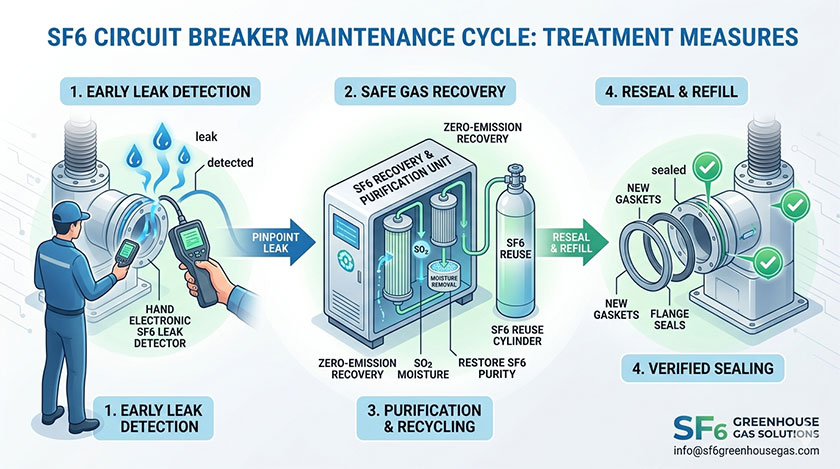
Sustainable and efficient treatment of SF6 gas leakage in circuit breakers relies on four essential phases:
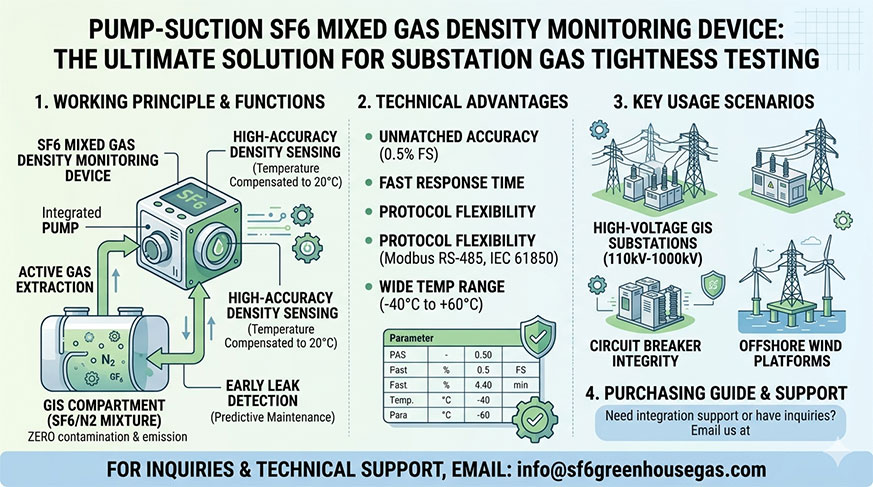
Proactive Detection: Utilizing high-precision infrared or ultrasonic leak sensors to identify micro-leaks before they compromise internal pressure thresholds.
Zero-Emission Recovery: Implementing closed-loop extraction methods to evacuate gas into specialized storage cylinders, ensuring that zero gas is released into the atmosphere during maintenance.
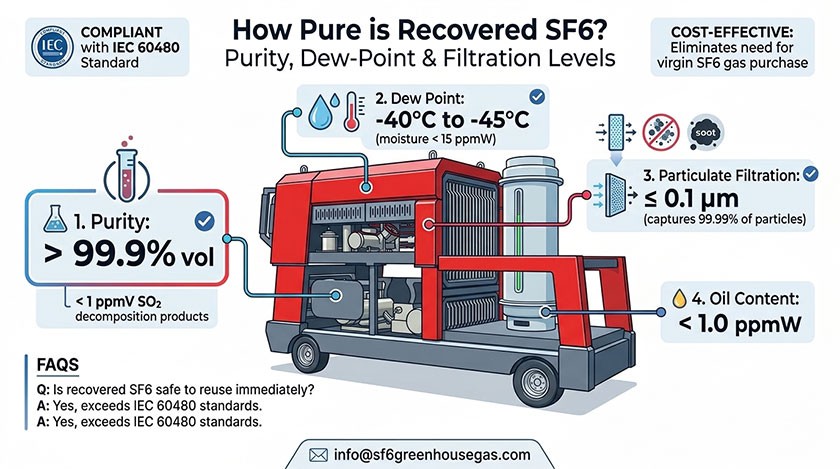
Purity Restoration: Employing advanced filtration systems to remove moisture, oil, and hazardous decomposition by-products (such as SO2 and HF), effectively recycling gas for continued use.
Seal Integrity: Ensuring the structural reliability of all joints and seals through systematic inspection and replacement cycles, verified by pressure-hold testing.
Professional Treatment Workflow
Safety & Quality Assessment: Perform an initial diagnostic test on the gas quality. If internal arcing has occurred, personnel must utilize appropriate personal protective equipment to handle potentially acidic gas by-products.
Pinpointing the Leak: Systematically scan all mechanical interfaces, including flange connections, operating mechanisms, and valve housings, using a professional SF6 leak detector.
Controlled Gas Recovery: Connect a certified recovery device to the circuit breaker to pull a vacuum, safely capturing the gas for processing.
Hardware Maintenance: Replace damaged gaskets or valves with high-quality, industry-standard components to guarantee a hermetic seal.
Moisture Removal & Refill: Execute a deep vacuum cycle to remove moisture ingress, followed by a controlled refill with high-purity SF6 gas, ensuring pressure levels are precisely balanced for regional temperature profiles.
Technical Maintenance Parameters
Adhering to the following benchmarks ensures the safety and longevity of your high-voltage infrastructure.
| Maintenance Criteria | Performance Standard |
| Leak Detection Sensitivity | <= 1 x 10^-6 mbar l/s |
| Purity Standard | > 99.7% |
| Moisture Limit | <= 10 ppmv |
| Recovery Efficiency | >= 99.5% |
Strategic Usage Scenarios
High-Voltage Substations: Essential for the routine maintenance of primary transmission circuit breakers to ensure grid stability.
Industrial Power Distribution: Vital for maintaining constant power uptime in critical manufacturing and petrochemical facilities.
Renewable Energy Interconnects: Necessary for managing SF6 assets in offshore wind farms and large-scale solar grid-tie stations where equipment reliability is paramount.
Frequently Asked Questions (FAQ)
How often should I monitor for SF6 gas leakage in circuit breakers?
Continuous real-time density monitoring is highly recommended. Additionally, a comprehensive purity and moisture analysis should be conducted annually or immediately following any significant fault-clearing event.
What are the risks of ignoring minor leaks?
Ignoring minor leaks leads to a decrease in dielectric strength, which increases the probability of internal arcing, permanent equipment damage, and significant non-compliance fines related to 2026 global environmental regulations.
Can we recycle the gas after a leak is detected?
Yes. Provided the gas is processed through a high-efficiency purification system that effectively removes moisture and particulates, the SF6 can be safely recycled and reused, aligning with circular economy practices.
Need Professional Technical Support?
If you are currently managing challenges related to SF6 gas leakage in circuit breakers or require expert guidance on selecting the appropriate testing and maintenance equipment for your facility, our engineering team is available to assist. We offer full-scale integration support, on-site technical training, and standardized maintenance solutions tailored to your specific infrastructure requirements.
For inquiries, technical support, or to request a consultation, please email us at: [email protected]
Leave A Message
Your email address will not be published. Required fields are marked *
More Articles