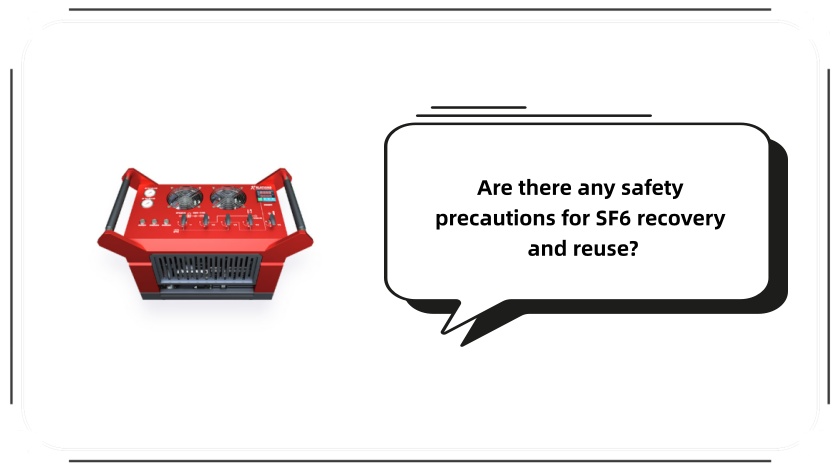
Are there any safety precautions for SF6 recovery and reuse?

SF6 Relations

2025-10-29

Article Clicks:

165

Are there any safety precautions for SF6 recovery and reuse?
Yes, SF6 recovery and reuse require strict safety precautions covering personnel protection, equipment operation, environmental control, and gas management—these measures prevent oxygen deficiency, exposure to toxic decomposition products, and environmental risks.

1. Personnel Protection Precautions

SF6 itself is non-toxic but can displace air (causing oxygen deficiency) and generate toxic substances (e.g., HF, SO2) when decomposed by high temperatures or electrical arcs. Key safeguards include:

  • Mandatory Personal Protective Equipment (PPE):

    1. Wear a positive-pressure air respirator (not a simple dust mask) when working in confined spaces (e.g., substation cable trenches) or areas with potential leaks—SF6 is 5 times denser than air and accumulates in low-lying areas, reducing oxygen levels to below 19.5% (the minimum safe threshold).

    2. Use acid-resistant gloves and protective clothing to avoid contact with toxic decomposition products (e.g., HF, which causes chemical burns to skin and eyes).

    3. Equip with safety goggles to prevent splashes of condensed SF6 or contaminated liquids.

  • Pre-Job Training: All operators must pass training on SF6 hazard identification (e.g., recognizing oxygen deficiency symptoms like dizziness or shortness of breath) and emergency response (e.g., using rescue breathing apparatus).

2. Equipment Operation Safety Precautions

Improper operation of SF6 recovery/reuse equipment can lead to gas leaks, overpressure explosions, or equipment damage. Follow these rules:

  • Pre-Operation Inspection:

    1. Verify that the equipment complies with IEC 60480 (e.g., leak rate ≤0.1%/year) and check seals (valves, hoses) for cracks—replace aging hoses (e.g., silicone hoses used for ≥2 years) to avoid leaks.

    2. Confirm that pressure gauges, vacuum pumps, and purity analyzers are calibrated (valid within the past 12 months)—inaccurate gauges may cause overpressurization of gas storage tanks.

  • Standardized Operation Process:

    1. Do not exceed the equipment’s rated pressure (e.g., most storage tanks have a maximum pressure of 3 MPa)—overpressurization can cause tank rupture.

    2. When evacuating the system before recovery, ensure the vacuum degree reaches ≤1 Pa (per IEC 61257) to minimize air mixing and avoid reducing SF6 purity.

    3. Avoid abrupt starts/stops of the vacuum pump—this prevents oil backflow (from the pump) from contaminating the recovered SF6.

3. Safety Precautions for Operating Environment Control

  • Mandatory Ventilation:

    1. Use mechanical exhaust fans (installed at ground level, where SF6 accumulates) in closed work areas (e.g., indoor GIS rooms) to maintain air exchange ≥3 times/hour. For large-scale operations, use SF6-specific exhaust systems with activated carbon filters to absorb residual gas.

    2. Do not work in unventilated low-lying areas (e.g., pits, basements) unless portable oxygen detectors are used—alarm if oxygen levels drop below 19.5%.

  • Leak Monitoring and Warning:

    1. Place SF6 leak detectors (detection limit ≤1 ppm) around the operation area and set up audible/visual alarms—immediately stop operations if leaks are detected.

    2. Mark the operation area with "No Unauthorized Entry" signs to prevent unrelated personnel from entering oxygen-deficient or toxic environments.

4. Gas Management Safety Precautions

  • Sealed Recovery and Transfer:

    1. Use double-sealed connectors (e.g., quick-connect couplings with O-rings) when connecting the equipment to SF6-insulated devices—this prevents gas leakage during disconnection.

    2. Do not drain SF6 directly into the atmosphere (violates EU F-Gas Regulation and IEC 60480)—recover it into dedicated high-pressure tanks (with pressure relief valves) for purification or centralized disposal.

  • Purity Verification Before Reuse:

    1. Before refilling recovered SF6 into electrical equipment, test its purity using a portable SF6 analyzer—ensure it meets reuse standards (SF6 purity ≥99.9%, moisture ≤5 μL/L, acidity ≤0.2 μL/L). Do not reuse gas that fails the test.

  • Handling of Waste Gas and By-Products:

    1. Toxic decomposition products (e.g., HF, SO2) generated during recovery must be neutralized with alkaline scrubbers (e.g., sodium hydroxide solution) before discharge.

    2. Discard contaminated filters (e.g., molecular sieves used for drying) as hazardous waste—do not dispose of them with regular garbage.

5. Emergency Disposal Precautions

  • Oxygen Deficiency Rescue: If an operator faints due to low oxygen, move them to a well-ventilated area immediately, give oxygen therapy, and call emergency services—do not enter the hazardous area without proper PPE.

  • Leak Accident Response: Isolate the leak source (close equipment valves), increase ventilation, and use SF6 absorbent materials (e.g., activated alumina) to absorb spilled gas—avoid using water to flush (SF6 is insoluble in water and will spread further).


Leave A Message

Your email address will not be published. Required fields are marked *

You can contact us via WhatsApp

Provide you with professional, timely and complete SF6 gas recovery and purification services.

Quick Inquiry